
Samuel Koster’s working week involves navigating the sobering realities of a funeral home, supporting the operations of an irrigation company, and perfecting the art of roasting coffee. It’s a busy load, yet Sam manages it all while serving as an Elder at Griffith Presbyterian Church and caring for his young family.
But for someone who always assumed he would become a pastor, his current path is, perhaps, an unexpected one.
Sam’s story is a testament to the central idea behind programs like the PYNSW Lead for Life internship: that training, spiritual formation, and discipleship in community are not merely a pipeline for vocational ministry, but fundamental building blocks for a life of faith.
From rules to relationship
Sam grew up in a Christian family, regularly attending church, which was a blessing that provided him with a foundational understanding of God. However, his faith journey has involved two key, necessary shifts. The first occurred around age 13 when he was struck by the weight of his own sin, and this drove him to personally own his faith rather than merely following in his parents’ footsteps.
The second, more recent shift was, in Sam’s words, a “gamechanger”. For years, his faith had been “rules-based,” focused on adherence to expectations and hard work. The breakthrough came when he realised that Christian life isn’t primarily about what he is saved from, or following a set of rules, but about the overwhelming truth that “God loves me”. This love, Sam realised, must be the driving force for his life, breaking down the barrier of striving and drawing him closer to Christ.
Lead for Life
Sam’s connection to Presbyterian Youth began with Summer Camp in 2010-11. He thrived socialising in Christian community and appreciated the investment in his faith life from leaders including David Bell and Gordon Cain.
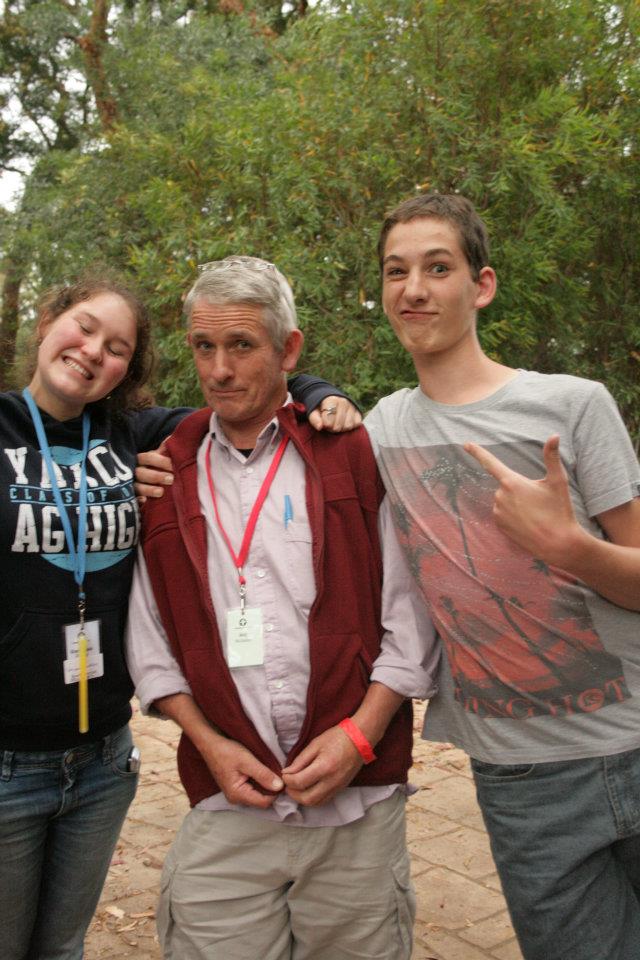
As he considered next steps, PY leaders encouraged him to participate in the Lead for Life intensive, particularly as it would be excellent preparation for his planned Year 13 Youthworks gap year. This was a natural fit for someone who had already felt drawn toward ministry, so Sam jumped in eagerly.
Sam was particularly impacted by the teaching he received during the Lead for Life intensive. He recalls it as “excellent” because it was perfectly pitched to challenge young Christians on the cusp of adulthood, without being either overly academic or watered down.
The investment of the leaders in supporting the interns also stood out to Sam. He recalls a lecturer – a lawyer – who challenged his ingrained black-and-white view of the world. When Sam asked how he balanced being a lawyer and a Christian, especially if defending someone who’s done something wrong, the lecturer simply questioned Sam’s certainty: “But how do I know they’re wrong?”. This moment helped shatter Sam’s simplistic worldview of good guys versus bad guys, forcing him to confront a profound truth: “It’s actually just so much messier than that, which means that God’s grace is so much bigger than my small mind can comprehend.”
The program also included foundational work on the nature of God, an essential lesson for someone who had an academic understanding of theology but needed his heart to grow in that area. Sam says that this reinforced for him that the program was very accurate in its title of “Lead for Life,” concerned not just with giving him head knowledge or practical skills, but with his total life with Christ.
A change in direction
Following Lead for Life, Sam began Year 13 and several years later, after relocating to Griffith for his wife’s work, commenced an MTS (Ministry Training Strategy)-Metro apprenticeship in 2020. He was pursuing the path he had long felt called to – vocational ministry – but the next two years would be a time of intense “hammering and moulding”.
The apprenticeship coincided with the start of the 2020 covid lockdowns and also brought profound personal challenges: the diagnosis of his father-in-law with a brain tumour and a heartbreaking miscarriage. Sam describes the period as him getting “pretty close to to rock bottom”. Yet, even amidst the grief and chaos, he saw a blessing in serving the youth group at Griffith Presbyterian, watching young people become Christians and grow in their faith. This was a time God used to form him, even as he was dealing with great loss and pain.
After an MTS apprenticeship, many apprentices head off to Bible college, and that’s where Sam expected to go next. But God had different plans, which Sam understood after deep reflection and conversation with his wife. “A lesson to all men is that when your wife says, ‘I’m not sure about this’, it’s time to stop and listen. God has given you a wise woman and a helper and she is worth listening to!”
With his wife’s help, Sam realised that he was “unable to prioritise my family over work, and when your work is ministry that’s a very messy, dangerous place to go”. It was time, as Sam says, to “stop the bullrush of what I thought God wanted for my life, and step back to ask, what does God call me to do? Well, he calls me to love my wife. He calls me to serve my family. And he calls me to serve his people. And so my priorities and our life started to shift dramatically.”
Sam says it was an “eye opening” and humbling moment of resetting priorities, moving away from his “self-built expectations” of what God wanted and instead submitting to God’s will.
Of course, the decision to stop pursuing vocational ministry was admittedly difficult, with Sam acknowledging that it took around six months for him to settle the grief and longing. Yet, he knew that to fully love God and his family as called, he needed to step off the vocational ministry pathway.
Instead of becoming a full-time pastor, Sam has settled into his current lay life, working full-time across multiple non-ministry jobs. He has found deep contentment working to provide for his family while dedicating his extra time to lay ministry within the local church.
There has been an unexpected joy too: Sam’s wife has found a calling in ministry as a full-time mother, running women’s Bible studies and mentoring. Sam delights in how he can free her up for this work.
A lifetime of ministry
Today, Sam Koster is an Elder at Griffith Presbyterian. His ministry involvement includes overseeing church activities, mentoring young adults who have come through the youth program, hosting a Bible study in his home and helping run the kids program for his wife’s Bible study.
When reflecting on his Lead for Life experience, as well as Year 13 and MTS, Sam affirms that the training he has received is “absolutely” being well-used. It provided him with “foundational works” that he now draws upon in his personal faith, church ministry and teaching his children about Jesus. He recognises that as an elder, mentor and parent, he has been entrusted with “the care of a part of Christ’s body.” His training was not wasted because he didn’t go into vocational ministry: it simply prepared him for a different type of service.
“I always figured God put everything in my life so that I would be a pastor one day. But to this day, God has said, ‘Actually, no, that’s not your job. I was training you for different purposes’,” Sam reflects.
Lead for Life is a great program for preparing Christians for a lifetime of leadership and service, and investing time in studying God’s word, and training for ministry is valuable regardless of whether a person ends up in vocational ministry. The lessons Sam has learned are as essential for a coffee roaster, funeral home worker, father, husband and church elder as they are for a pastor.
